
Testing questions
Veterinary test troubleshooting: what to check first
An invalid run, an instrument alert and an unexpected result need different checks. Start with the record, then follow the exact assay instructions.
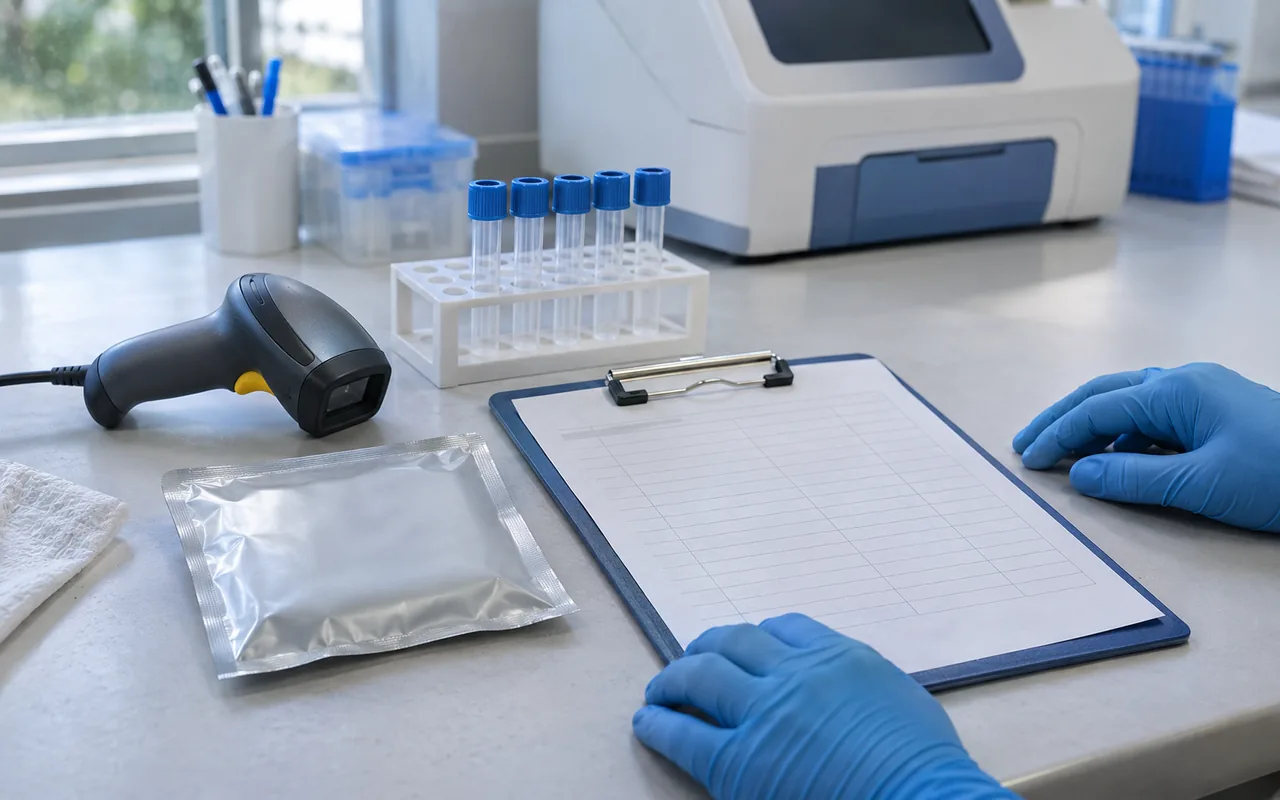
Veterinary test troubleshooting should start by identifying what happened: an invalid test, an analyzer error or a technically valid result that differs from expectations. Preserve the original message and run record, then use the instructions for the exact assay and instrument. An invalid run is not a negative result, and a surprising result does not by itself prove a test failure.
For qFLASH and veterinary mFIND, use the relevant analyzer manual together with the selected assay’s instructions in the resource library. Sample types, preparation, timing and interpretation rules must not be transferred from a different test.
Which kind of problem are you investigating?
Write down the observation before choosing an action. These three opening questions help keep the investigation specific:
Swipe horizontally to read the full table.
| Observation | First question | Useful record |
|---|---|---|
| Invalid or rejected run | What does this exact status mean in the applicable instructions? | Original run status, assay and lot |
| Analyzer message or interruption | Which error code appeared, and at what stage? | Full message, model, time and stage |
| Unexpected valid result | Were the sample and run acceptable, and what was the comparison based on? | Original result, units, controls and comparison details |
Do not overwrite the first result while investigating. Record any repeat as a separate run. That makes it possible to distinguish a recurring problem from a change introduced during troubleshooting.
What should you check about the sample?
Confirm sample identity, the permitted specimen type, collection container and handling history against the assay instructions. Note collection and testing times, storage conditions, and any visible or documented sample issue. Evaluate suitability using the specific acceptance criteria; appearance alone cannot establish whether every potential interference is absent.
WHO’s laboratory quality checklist calls for defined sample acceptance and rejection criteria, traceable sample records and instructions for collection, transport and storage. These are general quality-management principles, not product-specific limits. WHO laboratory quality checklist.
A concise note such as “specimen type confirmed; collection time recorded; transport history incomplete” is more useful than “sample looks fine.” If a required detail is unknown, record it as unknown and seek guidance instead of filling the gap with an assumption.
What should you check about the kit and analyzer?
Work through the applicable instructions and note the outcome of each check:
- Kit identity: correct assay, compatible analyzer, lot identification and expiry.
- Kit condition: intact packaging and a documented storage history; review any delivery concern using the shipping checklist.
- Run setup: the prescribed preparation, loading, timing and any required lot-specific setup were followed.
- Instrument status: the exact message, operating stage and any relevant maintenance or setup record.
- Controls: whether the required controls were run and met the criteria specified for that assay or system.
Use the manufacturer-defined checks and your laboratory’s quality procedure to decide when reporting may resume. Failed required controls or unresolved validity errors need review before affected results are released. The WHO laboratory quality handbook provides general background on managing reliable laboratory processes. WHO laboratory quality handbook.
Do not improvise a new sample volume, reaction time or instrument setting to obtain a preferred result. If the manual does not resolve an error, send the original information to support.
When is a repeat useful?
Repeat testing should answer a defined question and follow the applicable instructions or support guidance. Record why the repeat was performed, which factor changed and what happened. If sample suitability is unresolved, ask whether a new sample is needed; repeated runs of the same unsuitable material may not answer the original question.
For a valid but unexpected result, involve the responsible veterinarian or laboratory reviewer. Review the clinical context, assay target, specimen, units and comparison method. Two methods may measure different things; the immunoassay and molecular testing comparison explains that distinction. Do not average incompatible results or select whichever one matches an expectation.
What should a support request contain?
Use this suggested case summary to reduce missing information:
- Analyzer model, serial number and software version if available.
- Assay name, catalogue reference, lot and expiry.
- Exact message or run status, with a screenshot where available.
- Specimen type and relevant preparation, timing and storage details.
- Required control results and any recent setup or maintenance change.
- Actions already taken, the result of each action and whether other runs were affected.
Keep the original records locally. Remove owner and patient identifiers from material shared for support. Send the summary through the Dawnsail contact page; ask the team which supporting files are needed.
After resolution, record the confirmed cause, action and check used to close the issue. If the cause remains uncertain, retain that uncertainty in the record. WHO’s occurrence-management training distinguishes immediate correction from addressing a cause and preventing recurrence. WHO occurrence-management training. A short, traceable case record helps the next operator investigate the same symptom without starting again.